
Watches have quietly become one of the most competitive categories in tech. What used to be a simple choice between “smart” or “analog” now spans full-touchscreen smartwatches, hybrid watches that hide their tech behind classic dials, and ultra-affordable fitness watches that outperform flagships from just a few years ago. Whatever your budget or lifestyle, there is a genuinely excellent watch for you in 2026—this guide breaks down exactly which one.
Jump to a section
What Counts as a “Best Watch” in 2026?
“Best” depends entirely on what you need a watch to do. A marathon runner, a business traveller who hates charging cables, and someone who simply wants texts on their wrist are shopping for three completely different products—even though they all say “smartwatch” on the box.
⚡ Quick Answer: Best overall for iPhone is the Apple Watch Series 11. Best for Android is the Samsung Galaxy Watch 8. Best budget pick is the Amazfit Active 2 (under $100). Best hybrid watch is the Withings ScanWatch 2. Best for runners is the Garmin Forerunner 265. Best rugged/outdoor watch is the Apple Watch Ultra 3.
Below, we compare watches across every major category so you can match the right device to how you actually live—not just the one with the flashiest spec sheet.
Smartwatch vs. Hybrid vs. Fitness Watch
Before comparing individual models, it helps to understand the three broad categories of “watch” on the market today.
| Feature | Full Smartwatch | Hybrid Watch | Fitness/GPS Watch |
|---|---|---|---|
| Display | Full colour touchscreen | Analog face, small digital window | Always-on, often transflective |
| Battery life | 1–2 days typical | Up to 30 days | 5–20+ days |
| Notifications | Full app support | Basic alerts only | Basic to moderate |
| Health tracking | Excellent, broad range | Excellent, medical-grade on some models | Excellent for exercise-specific metrics |
| Style | Clearly a tech device | Looks like a traditional watch | Sporty, purpose-built |
| Best for | Everyday connected living | Those who dislike charging daily | Runners, cyclists, swimmers |
Bottom line: If you want apps and notifications on your wrist, get a full smartwatch. If you want serious health tracking without looking like you’re wearing a gadget, get a hybrid. If your main goal is training data and multi-day battery life during long events, get a dedicated GPS fitness watch.
Key Features to Look for in a Watch
1. Battery Life
This is the single biggest trade-off in the category. Full-touchscreen smartwatches like the Apple Watch and Galaxy Watch typically last one to two days. Hybrid watches like the Withings ScanWatch line can run for weeks. Budget and outdoor watches often split the difference, lasting anywhere from 5 to 20+ days depending on GPS and always-on display use.
2. Health and Fitness Sensors
Nearly every watch now tracks heart rate, sleep, and blood oxygen. What separates premium models is accuracy and depth—look for ECG with AFib detection, skin temperature tracking, and multi-day recovery or “readiness” scoring if health insight is your priority.
3. GPS and Workout Tracking
If you run, cycle, or hike, built-in multi-band GPS matters far more than screen resolution. Dedicated fitness watches (Garmin especially) still lead here, offering offline maps, VO2 max estimates, and structured training plans that general-purpose smartwatches don’t match.
4. Phone Compatibility
Apple Watches only pair with iPhones. Most other brands (Samsung, Google, Garmin, Amazfit, Withings) work across both iOS and Android, though Samsung and Google watches unlock extra features on their own ecosystem’s phones.
5. Durability and Water Resistance
Look for at least 5 ATM (50m) water resistance for swimming, and a titanium or reinforced case if you want a watch that can handle hiking, diving, or job-site wear without babying it.
6. Calls, Notifications & Payments
Full smartwatches support app notifications, replies, and contactless payment. Hybrid watches typically limit this to basic alerts shown on a small display window, which is exactly the trade-off some buyers want.
Best Watches of 2026 Compared
Here’s how our top picks stack up across price, battery life, and who each one suits best.
| Watch | Best For | Price (approx.) | Battery Life | Standout Feature |
|---|---|---|---|---|
| Apple Watch Series 11 | iPhone users wanting the full ecosystem | From $399 | Up to 24 hours | Deepest app & health ecosystem integration |
| Samsung Galaxy Watch 8 | Android users, especially Galaxy phone owners | From $349 | Up to 30 hours | Gemini AI assistant built in |
| Google Pixel Watch 4 | Wear OS fans wanting long battery | From $399 | Up to 48 hours | Repairable design, domed Actua 360 display |
| Garmin Forerunner 265 | Serious runners and endurance athletes | From $449 | Up to 13 days | Garmin Coach training plans & VO2 max |
| Withings ScanWatch 2 | Buyers who want medical-grade tracking in an analog design | From $349 | Up to 30 days | Medical-grade ECG with AFib detection |
| Amazfit Active 2 | Budget-conscious buyers | From $99 | Up to 10 days | Offline maps at an under-$100 price |
| Apple Watch Ultra 3 | Divers, explorers & outdoor athletes | From $799 | Up to 42 hours | Titanium build, extreme brightness & durability |
Detailed Look at Each Watch
1. Apple Watch Series 11
The Series 11 remains the default choice for iPhone owners, and for good reason. It ties together notifications, payments, apps, and health tracking more seamlessly than any competitor—if you’re already in the Apple ecosystem, nothing else feels as effortless.
Standout features:
- Deep iPhone and Apple Health integration
- Bright always-on display
- Huge third-party app library
- Fall, crash, and irregular heart rhythm detection
Considerations:
- iPhone-only—no Android support
- Battery still needs charging daily
- Premium pricing versus Android rivals
2. Samsung Galaxy Watch 8
Samsung’s flagship brings Google’s Gemini AI assistant to your wrist alongside strong sleep and heart health tracking. It’s the natural pick for Android users, and especially rewarding if you’re already carrying a Galaxy phone.
Standout features:
- Built-in Gemini AI voice assistant
- Slim Armor Aluminum case
- Strong sleep coaching and heart health tools
- Fast charging
Considerations:
- Best features favour Samsung phones specifically
- Still needs daily charging
- Fewer third-party apps than Apple Watch
3. Google Pixel Watch 4
The best general-purpose Wear OS watch on the market, the Pixel Watch 4 pairs a genuinely repairable design with a domed Actua 360 display and battery life that comfortably stretches beyond a day—often close to two.
Standout features:
- Repairable at home—a rarity for smartwatches
- Domed Actua 360 display
- Strong battery life for a full smartwatch
- Works well across Android phones, not just Pixel
Considerations:
- Design is a close iteration on the previous generation
- Smaller app ecosystem than Apple Watch
- No iOS support
4. Garmin Forerunner 265
For anyone training seriously, Garmin still sets the standard. The Forerunner 265 combines accurate GPS, an AMOLED display, and Garmin’s training tools in a package built specifically for runners rather than general smartwatch users.
Standout features:
- Garmin Coach adaptive training plans
- VO2 max and recovery time estimates
- Multi-day battery life even with regular GPS use
- Works with both iOS and Android
Considerations:
- Less polished for everyday notifications than Apple/Samsung
- Smaller app store
- Overkill if you don’t train regularly
5. Withings ScanWatch 2
The ScanWatch 2 looks like a classic analog watch but hides medical-grade health sensors underneath, including a genuine ECG that can flag AFib. It’s the pick for anyone who wants serious health data without their watch screaming “tech gadget.”
Standout features:
- Medical-grade ECG with AFib detection
- SpO2 and 24/7 body temperature tracking
- Up to 30 days of battery life
- Classic analog design with a small OLED display
Considerations:
- No touchscreen and limited notification detail
- Small display window shows minimal information at a glance
- Optional subscription for deeper health insights
6. Amazfit Active 2
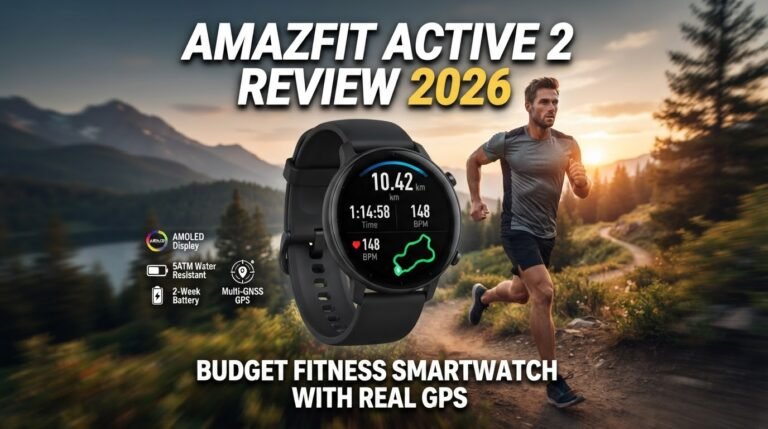
Proof that you no longer need to spend hundreds to get a genuinely capable smartwatch. The Active 2 packs offline maps, solid heart rate tracking, and a premium-feeling stainless steel case into a sub-$100 price tag. Read our full Amazfit Active 2 review for the complete breakdown.
Standout features:
- Offline maps—rare at this price point
- Stainless steel case with AMOLED display
- 160+ workout modes
- Ability to pair an external heart rate sensor
Considerations:
- Built-in GPS accuracy trails premium rivals
- Notification and app support is basic
- Companion app less polished than Apple/Samsung/Garmin
7. Apple Watch Ultra 3
Built for people who take their watch somewhere Apple’s regular lineup can’t follow—deep water, mountains, or multi-day expeditions. The titanium case and blindingly bright display are designed to survive conditions that would concern a standard smartwatch.
Standout features:
- Titanium case built for extreme durability
- Exceptionally bright, sunlight-readable display
- Dive and expedition-grade water resistance
- Longest battery life of any Apple Watch
Considerations:
- Significant price jump over the standard Series 11
- Larger, heavier case than most buyers need
- Still iPhone-only
Who Should Buy Which Watch?
- iPhone owners who want it all: Apple Watch Series 11
- Android/Galaxy phone owners: Samsung Galaxy Watch 8
- Wear OS fans prioritising battery life: Google Pixel Watch 4
- Runners and endurance athletes: Garmin Forerunner 265
- Anyone who hates daily charging but wants real health data: Withings ScanWatch 2
- First-time buyers or tight budgets: Amazfit Active 2
- Divers, hikers, and outdoor adventurers: Apple Watch Ultra 3
Common Questions About Buying a Watch in 2026
Do I need a subscription to use a smartwatch?
No—core features like notifications, activity tracking, and heart rate work without a subscription on every watch in this guide. Some hybrid and health-focused watches offer optional paid tiers for deeper insights, but they’re never required for basic use.
Will a watch work with my phone?
Apple Watches only work with iPhones. Samsung, Google, Garmin, Amazfit, and Withings watches all support both iOS and Android, though Samsung and Google models unlock extra features when paired with their own brand of phone.
How long do smartwatches actually last before needing to be replaced?
Most smartwatches remain fully functional for 3–5 years, though software support windows vary by brand. Battery capacity gradually declines with age, similar to a smartphone.
Are hybrid watches as accurate as full smartwatches?
For core health metrics like heart rate, sleep, and ECG, hybrid watches like the Withings ScanWatch 2 are just as accurate—in some cases more clinically validated. What they trade away is screen size and real-time notification detail, not sensor accuracy.
Do I need built-in GPS?
If you run or cycle outdoors and want accurate pace and distance without carrying your phone, yes. If you mainly walk or work out indoors, connected GPS (using your phone’s location) is usually enough, and it’s common on budget watches.
More In-Depth Smartwatch Reviews
Want the full breakdown on a specific model? We’ve published deep-dive reviews for several watches worth considering alongside the picks above:
- Amazfit Bip 5 Pro Review 2026 — best sub-£60 everyday pick
- Amazfit Active 2 Review 2026 — full review of our budget pick above
- Garmin Forerunner 55 Review 2026 — mid-range training watch for runners
- Coros Pace 4 Review 2026 — outdoor endurance with up to 19 days of battery
- Apple Watch SE 3 Review 2026 — best first smartwatch for iPhone owners
- Garmin Fenix Review 2026 — no-compromise premium pick
Final Thoughts
There’s no single “best” watch in 2026—there’s a best watch for what you’re actually trying to do. If you live inside the Apple or Samsung ecosystem and want everything on your wrist, the Series 11 or Galaxy Watch 8 will feel effortless. If daily charging is a dealbreaker, the Withings ScanWatch 2 delivers real medical-grade tracking without it. Serious runners will get more from a Garmin than any general-purpose smartwatch, and if budget is the deciding factor, the Amazfit Active 2 proves you don’t need to spend $400+ to get a genuinely good watch.
Whichever category fits your life, the watches above represent the strongest options 2026 has to offer—tested categories, not just hype.
ALSO SEE Top Smart Watches for 2026: Apple, Samsung, Garmin, Pixel & Fitbit Compared
📥 Get Our Free 2026 Digital Tools Stack
A free guide to the best hosting, VPN, cybersecurity and AI tools for 2026 — delivered straight to your inbox.
Compare These Picks Side by Side
[megastore76_smartbuy category=”Smart Devices”]You Might Also Like
 <span class="mrx-read-time-wrap mrx-read-time-before"><span class="mrx-read-time-badge">7 min read</span></span> Best Smartwatches 2026: 8 Picks Compared (£5.67–£113.48)
Eight smartwatches from Megastore76's current stock compared on price, ecosystem and use case — from a £5.67 first watch to a £113 standalone 4G model with its own camera.
View Details <span class="mrx-read-time-wrap mrx-read-time-before"><span class="mrx-read-time-badge">5 min read</span></span> Sleep Tracking 2026: Ring vs Watch vs Mattress Sensor vs Smart Alarm Clock
Ring, watch, under-mattress sensor or smart alarm clock — a decision-layer comparison of how each type of sleep tracker actually works, before you pick a specific model.
View Details <span class="mrx-read-time-wrap mrx-read-time-before"><span class="mrx-read-time-badge">3 min read</span></span> Amazfit Bip 5 Pro Review 2026: The Best Budget Smartwatch for Everyday Wear
⚡ Quick Answer: The Amazfit Bip 5 Pro is the smartwatch to buy if you want a genuinely…
View Details <span class="mrx-read-time-wrap mrx-read-time-before"><span class="mrx-read-time-badge">3 min read</span></span> Amazfit Active 2 Review 2026: Budget Fitness Smartwatch With Real GPS
⚡ Quick Answer: The Amazfit Active 2 punches well above its budget price, packing offline maps, onboard GPS,…
View Details

[…] This is the right pick for hikers, trail runners, and anyone on multi-day trips who values battery life above smart features. If structured training plans matter more to you, the Garmin Forerunner 55 is worth comparing, and if you want premium build quality plus smartwatch features alongside endurance, look at the Garmin Fenix instead — or see our full Best Watches 2026 comparison guide. […]
[…] This is the right pick for iPhone owners who want the full Apple Watch experience without the flagship price. If you’re an Android user or want serious training tools instead of smartwatch polish, the Garmin Forerunner 55 or Garmin Fenix are worth comparing — or see our full Best Watches 2026 comparison guide. […]