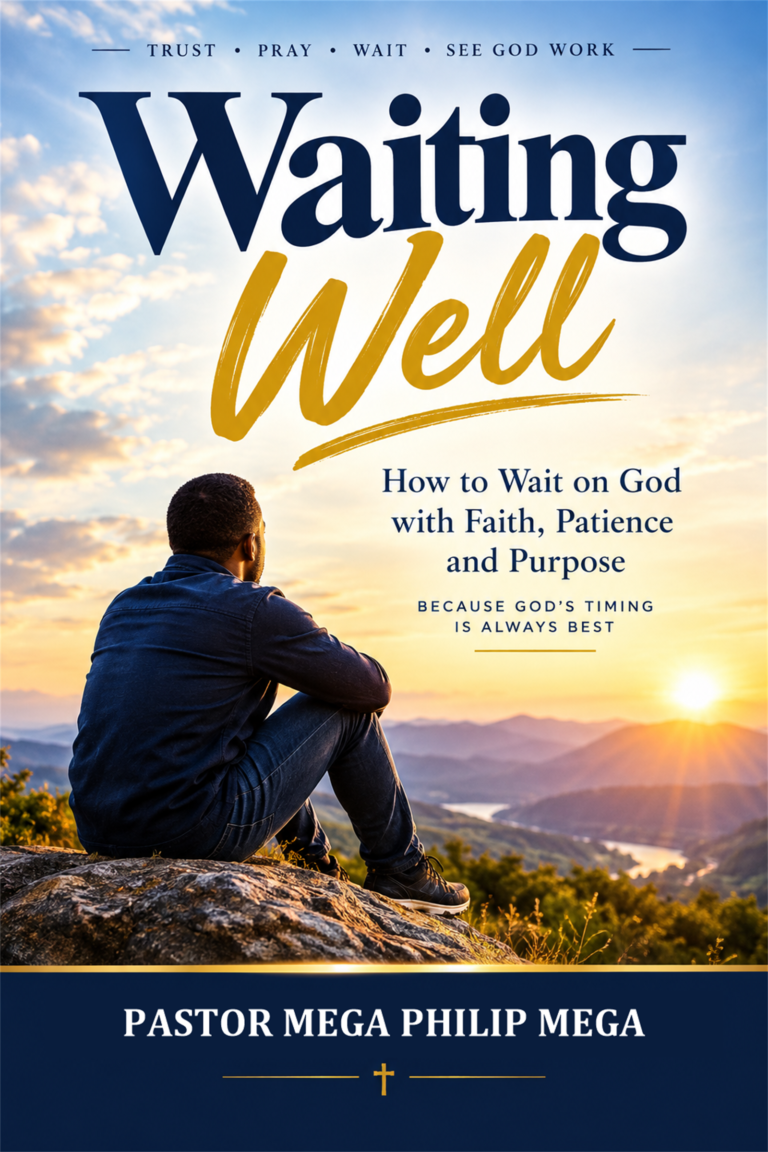
By Pastor Mega Philip Mega, author of Bringing Up God-Fearing Children.
Many Christian parents feel overwhelmed, underprepared or discouraged. But God never intended parenting to be lived out of fear or frustration. He designed it as a calling, a holy assignment. And one of the most hopeful truths about raising children who love God is this: children observe everything. Long before they understand sermons or memorise Scripture, they study your life.
Jump to a section
Parenting is stewardship, not ownership
“Behold, children are a heritage from the LORD, the fruit of the womb a reward.”
Psalm 127:3 (ESV)
Children are not random additions to a household. They are gifts entrusted to parents for a kingdom purpose. Parents are not owners but stewards, managing something that ultimately belongs to God. When you understand this, parenting becomes more than feeding, clothing and schooling. It becomes discipleship. And your children’s first picture of God will often come from watching you.
Your walk with God is your child’s first Bible
How you pray, how you speak, how you forgive, how you handle stress, how you love: these things preach louder than any Sunday message. A God-fearing parent does not just point children to Jesus but leads the way. Ask yourself:
- Do my children see me pray?
- Do they hear me give thanks?
- Do they watch me read Scripture?
- Do they see integrity in my choices?
- Do they experience love and patience in my words?
God’s design for parenting is generational: Abraham taught Isaac, Isaac influenced Jacob, and faith, values and habits flow through generations. Children do not simply become what they are told to be. They become what they consistently see.
Five habits of a God-fearing parent
- Stay teachable. Parents do not know everything, and God never expects them to. Let Scripture shape your thinking, learn from other godly parents, adjust when something is not working, and apologise when you are wrong.
- Pray. Prayer is the greatest tool a Christian parent has, because only God can reach a child’s heart. Pray for their salvation, their friends, their future spouse, their health and their destiny. Where your hands cannot reach, your prayers can.
- Combine love with discipline. Love without discipline produces unstable, entitled children. Discipline without love produces fearful or hardened hearts. Correct with calm, not anger; discipline to teach, not to shame; make the home a safe place for mistakes.
- Walk in humility. Say “I’m sorry” when you are wrong. Humility does not weaken authority. It strengthens the relationship and teaches children it is safe to be human, to grow and to change.
- Live the overflow. Your child’s spiritual growth flows from your spiritual life. You can only give what you have, so let God fill your heart and let your children drink from the overflow.
Build rhythms that keep God at the centre
A Christ-centred home is not defined by a Bible on the shelf or Christian music playing, though these help. It is a home where Jesus is the foundation, the atmosphere and the priority. Rhythms shape the habits and values of children:
- Family prayer. Children learn prayer more by watching it than hearing teaching about it. Daniel prayed three times a day (Daniel 6:10), and that rhythm sustained his faith in a foreign land.
- Reading Scripture together. Even one verse a day opens a child’s heart. God told parents to teach His Word “when you sit in your house, and when you walk by the way, and when you lie down, and when you rise” (Deuteronomy 6:7, ESV), so Scripture is woven into everyday life.
- Worship in the home. Worship shifts the atmosphere. When David played the harp, the presence of God brought peace to King Saul (1 Samuel 16:23). If worship changed a palace, it can transform a home.
Teaching children to love God, not to fear Him wrongly
A God-fearing child is not a child who is scared of God, but one who respects, honours and loves Him. Parents teach this by showing God’s kindness, explaining forgiveness, demonstrating His patience, modelling repentance and explaining consequences with grace. In the parable of the prodigal son, the father is loving, merciful, welcoming and patient. Children need to see God as a Father with open arms.
Devotion, not perfection
A God-fearing parent is not defined by perfection but by devotion. When your heart is aligned with God, your children receive a living example of what it means to know Him, and your walk with God becomes the foundation on which they build their own.
Questions to ask yourself
- If my children only learned about God from watching me this week, what would they learn?
- Which one rhythm (prayer, Scripture, worship) could we start in our home tonight?
- When did I last say “I’m sorry” to my child?
Frequently asked questions
What does “God-fearing” mean for children?
It means a child who respects, honours and loves God, not one who is scared of Him. Parents teach this by showing God’s kindness, forgiveness and patience.
How can I teach my children to pray?
Let them watch you pray, pray together as a family, and keep prayer simple. Children learn prayer more by watching it than by hearing lessons about it.
What if I am not a perfect parent?
God does not ask for perfection but devotion. Humility, apologies and a teachable heart are part of what children learn from you.
This article is drawn from chapters 1 to 4 of Bringing Up God-Fearing Children. Related reading: What does it mean to love like Jesus?
You Might Also Like
 The Compromise Trap: How Integrity Erodes One Small Choice at a Time
Nobody decides to destroy their integrity. How compromise works, what David's story shows, where guardrails belong, and the grace available when you have drifted.
View Details
Integrity When No One Is Watching: Holy in PrivateWhat you do when no one is watching is what God sees. Daniel, Joseph and Jesus on private integrity, plus a practical way to guard one room this week.
View Details When God’s Instructions Don’t Make Sense: Unusual Obedience
What to do when God's instruction collides with logic: why He gives strange instructions, what obedience costs, and seven practical steps.
View Details Eight Scriptures for Busy Christian Couples: A Marriage Devotional
Eight short passages and questions for couples balancing careers, marriage and family: love as a choice, mutual submission, listening, confession and forgiveness.
View Details