
Imagine walking into your home and the lights turn on just the way you like them—soft, warm, and welcoming. Or commanding your room to glow in energizing colors with just your voice. That’s not a fantasy—it’s the power of smart lights in 2026.
Smart lighting is one of the easiest and most impactful ways to step into the smart home revolution. These intelligent bulbs go beyond just turning on and off—they dim, change colors, sync with your music, follow schedules, and can even mimic your presence when you’re away.
Jump to a section
Why Smart Lights?
- Remote control from anywhere via smartphone
- Voice commands through Alexa, Google Assistant, or Siri
- Customized scenes for reading, parties, movies, or bedtime
- Energy-efficient LED technology
- Automation and scheduling
Comparison at a Glance
| Model | Hub Required | Best For | Standout Feature |
|---|---|---|---|
| Philips Hue White & Color Ambiance | Yes, for full features | Immersive mood lighting | 16 million colors, syncs with music/movies/games |
| LIFX Color A19 | No | Brightness & vivid color | Full-featured without needing a hub |
| Govee Smart Light Bulbs | No | Budget-conscious buyers | Full RGBWW color range at a low price |
| TP-Link Kasa Smart Bulb (KL130) | No | Smart home beginners | Simple setup with in-app energy monitoring |
| Nanoleaf Shapes / Lines | No | Design lovers & gamers | Modular, touch-sensitive, music-reactive wall panels |
1. Philips Hue White & Color Ambiance
Hue remains the benchmark for smart lighting, offering 16 million colors and 50,000 shades of white, with reliable Alexa, Google Assistant, and Apple HomeKit support. It syncs with music, movies, and games for genuinely immersive lighting effects, though you’ll need the Hue Bridge to unlock the full feature set beyond basic on/off and dimming.
Pros: unmatched color accuracy and range, deepest smart-home ecosystem support, syncs beautifully with entertainment.
Cons: full features require buying the separate Hue Bridge, pricier per bulb than hub-free competitors.
Best for: households that want the most polished, immersive mood lighting and don’t mind the extra hub investment.
2. LIFX Color A19 Smart Bulb
LIFX delivers brilliant colors and deep whites with no hub required—everything runs over Wi-Fi directly, which simplifies setup considerably. The app handles control and automation smoothly, and it works with all the major voice assistants out of the box.
Pros: no hub needed, genuinely bright and vivid output, straightforward app setup.
Cons: relies on a stable Wi-Fi connection for every bulb rather than a dedicated mesh network, can be pricier than budget alternatives.
Best for: buyers who want Hue-level brightness and color without adding another hub to the network.
3. Govee Smart Light Bulbs
Govee packs a full RGBWW color range, app and voice control, and music sync into a genuinely budget-friendly package. Group control makes it easy to coordinate lighting across multiple rooms from one app, making it a strong value pick for anyone furnishing a whole home with smart bulbs.
Pros: excellent value for the color range on offer, easy multi-room group control, no hub required.
Cons: build quality and app polish trail Philips Hue, smart home ecosystem integration is a bit less mature.
Best for: party lovers and budget-conscious buyers who want colorful lighting throughout the whole home.
4. TP-Link Kasa Smart Bulb (KL130)
The Kasa KL130 is reliable, easy to use, and needs no hub, making it one of the simplest entry points into smart lighting. It offers tunable white and full color output, plus in-app energy monitoring so you can see exactly what your lighting is costing you.
Pros: genuinely simple setup, no hub required, useful built-in energy monitoring.
Cons: color vibrancy doesn’t quite match Hue or LIFX, fewer advanced automation options.
Best for: smart home beginners who want a reliable, no-fuss first smart bulb.
5. Nanoleaf Shapes or Lines
Nanoleaf blurs the line between lighting and wall art, with touch-sensitive, music-reactive panels that can be arranged into custom modular shapes. It’s compatible with the major smart assistants, but its real appeal is aesthetic—a genuine centerpiece rather than a functional bulb replacement.
Pros: genuinely striking as a design feature, highly customizable modular layout, responsive to touch and music.
Cons: significantly pricier per square foot of light than standard bulbs, more of a decor statement than practical room lighting.
Best for: design lovers, streamers, and gamers who want a striking lighting centerpiece rather than just illumination.
Verdict: Which Should You Buy?
If you want the most immersive, ecosystem-rich lighting and don’t mind the extra hub, Philips Hue is still the benchmark. Want Hue-level color without a hub? Go with LIFX. Furnishing a whole home on a budget favors Govee, while first-time smart home buyers will appreciate how simple the TP-Link Kasa is to set up. If you want lighting as art rather than just illumination, Nanoleaf is in a category of its own.
Frequently Asked Questions
Do all smart bulbs need a separate hub?
No. Most modern smart bulbs, including LIFX, Govee, and TP-Link Kasa, connect directly to your Wi-Fi. Philips Hue is the main exception where a dedicated Hue Bridge is recommended for the full feature set.
Will smart bulbs work with my existing light fixtures?
In most cases yes—smart bulbs use standard bulb bases like E26/E27, so they typically screw straight into existing lamps and fixtures without any rewiring.
Do smart lights actually save energy?
Yes. They use efficient LED technology and can be scheduled or automated to turn off when rooms are empty, and models like the TP-Link Kasa even show you real energy usage data in the app.
Browse the latest smart lights on Amazon
Compare These Picks Side by Side
[megastore76_smartbuy category=”Smart Devices”]You Might Also Like
 <span class="mrx-read-time-wrap mrx-read-time-before"><span class="mrx-read-time-badge">8 min read</span></span> Best Dorm Room LED Strip Lights 2026: Renter-Safe Picks for Students
RGB LED strips are a huge dorm-room trend, but rental rooms need a different approach than a general buying guide — renter-safe mounting, budget picks, and the right run length for a single desk wall or headboard.
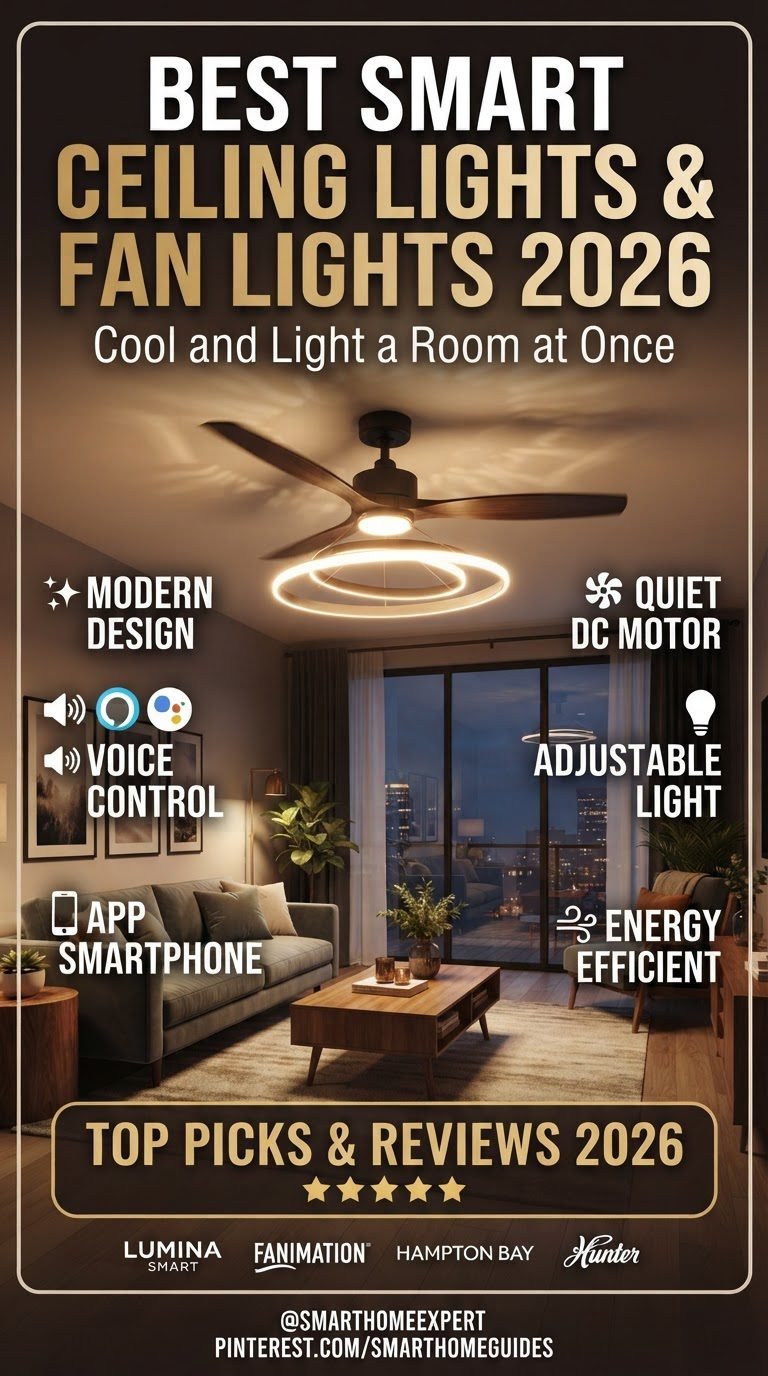
View Details <span class="mrx-read-time-wrap mrx-read-time-before"><span class="mrx-read-time-badge">9 min read</span></span> Best Smart Ceiling Lights & Fan Lights 2026: Cool and Light a Room at Once
The best smart ceiling lights and fan lights of 2026 compared. We rank multi-colour fan lights, bladeless fans, Philips Hue, Yeelight, Govee and smart bulbs for every budget.
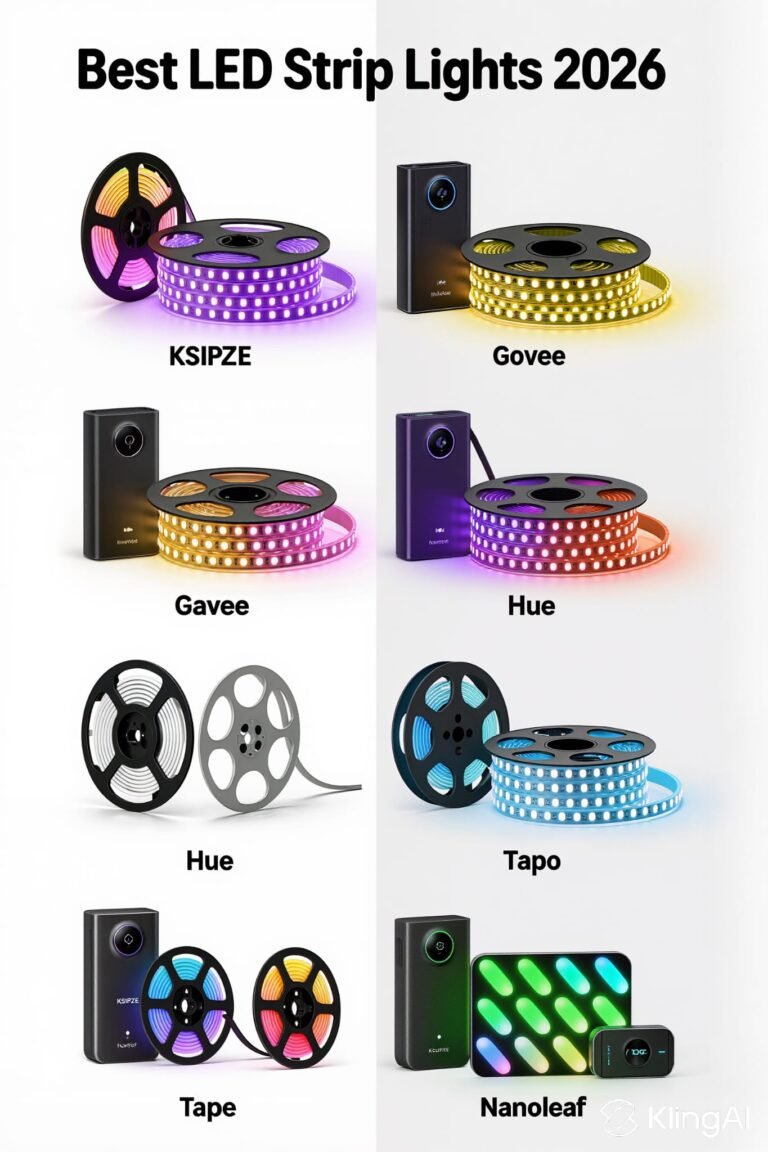
View Details <span class="mrx-read-time-wrap mrx-read-time-before"><span class="mrx-read-time-badge">9 min read</span></span> Best LED Strip Lights 2026: KSIPZE vs. Govee, Hue, Tapo & Nanoleaf
The best LED strip lights of 2026 compared. We explain the RGB vs RGBIC difference that most buyers miss, and rank KSIPZE, Govee, Philips Hue, Tapo, Nanoleaf and Lepro.
View Details
[…] See Also Smart Lights […]
[…] See Also Smart lights […]
[…] Learn Also about Smart Lights […]
[…] See also Smart Lights […]