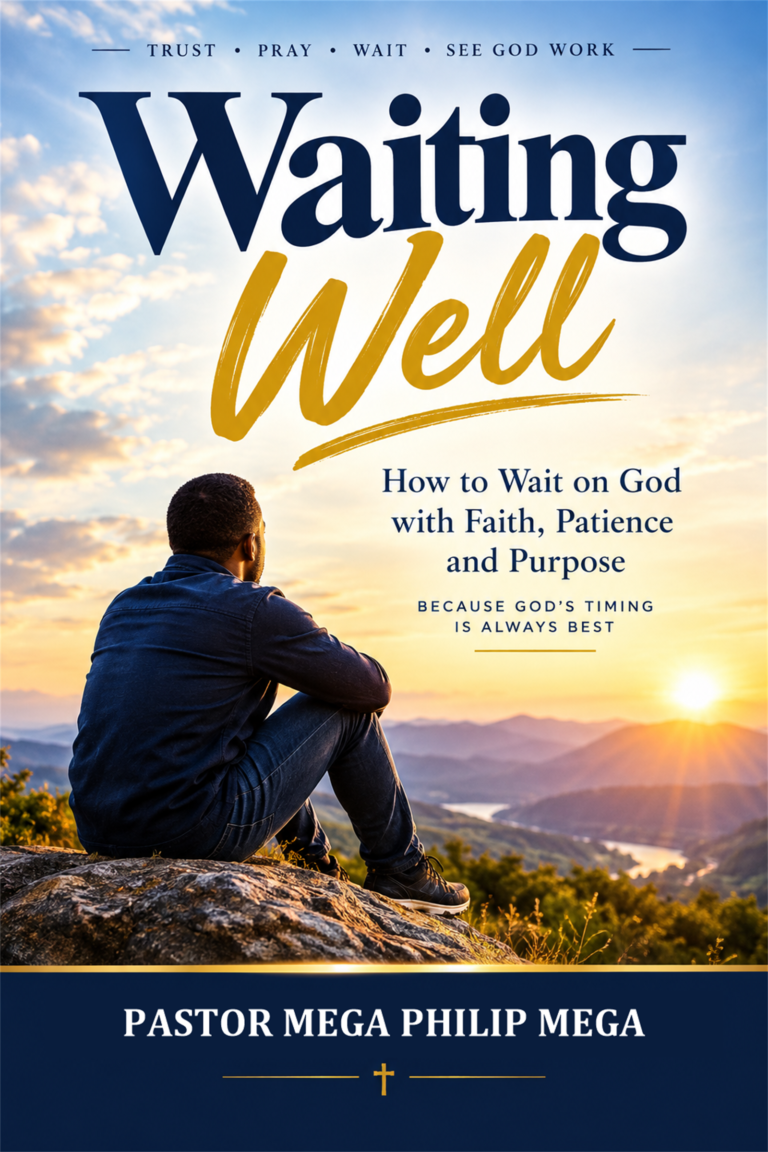
By Pastor Mega Philip Mega, author of God’s Blueprint for a Strong Christian Marriage.
Marriage is one of the most beautiful gifts God ever gave humanity, and one of the most misunderstood. Many couples enter it with excitement but without spiritual preparation. Others want a strong marriage but lack a biblical blueprint to build one. If God designed marriage, then only His blueprint can sustain it. So where did marriage begin, and what did God intend it to be?
Jump to a section
Marriage began in the heart of God
Marriage was not a human invention, a cultural idea or a social experiment. Its origin is in God Himself, designed in Eden, blessed by the Creator and established as the first covenant relationship between people. The earliest chapters of Genesis show that marriage was not an afterthought. It was part of God’s master plan.
- God saw that something was “not good.” Before sin ever entered the world, Adam had purpose, work and fellowship with God, and yet God said it was not good for the man to be alone (Genesis 2:18).
- God brought the woman to the man. Marriage began with God’s initiative and God’s presentation (Genesis 2:22).
- The pattern is set. “Therefore a man shall leave his father and his mother and hold fast to his wife, and they shall become one flesh” (Genesis 2:24, ESV). This verse is the foundation of biblical marriage teaching, from Genesis to Jesus to Paul.
Marriage was instituted before sin
Marriage was created in a perfect environment, before the fall: no insecurity, no domination, no distrust, no selfishness. It is not a product of brokenness. It is a gift designed in perfection. That is one reason marriages face such fierce opposition: what God established before sin and blessed with purpose is worth attacking.
Marriage reflects God’s image
Scripture says God created mankind in His own image, male and female (Genesis 1:27). Marriage was designed to reflect God’s image, multiply His purposes and extend His kingdom on earth.
Jesus confirmed the origin of marriage
“What therefore God has joined together, let not man separate.”
Matthew 19:6 (ESV)
Thousands of years after Eden, Jesus reaffirmed Genesis. In His words, marriage is God-ordained, it is a God-joining and not merely a human agreement, it is meant to be lifelong, and it begins with covenant, not emotions.
A covenant, not a contract
Contracts can be broken when terms are unmet. Covenants demand faithfulness even when feelings shift. Scripture describes marriage as a covenant, with God as witness and sustainer (see Malachi 2:14). A covenantal marriage means:
- you are committed beyond emotion;
- you love beyond comfort;
- you forgive beyond convenience.
Marriage today is often treated as a legal arrangement or a social agreement between two individuals. In Scripture it is something deeper, stronger and more sacred: a holy, binding, lifelong commitment made before God. Understanding this is one of the keys to a marriage that does not easily break under pressure.
Christ and the church as the model
“Husbands, love your wives, as Christ loved the church and gave himself up for her.”
Ephesians 5:25 (ESV)
Paul calls marriage a profound mystery that speaks of Christ and the church (Ephesians 5:32). A marriage built on this pattern is sacrificial, patient, loyal and grace-filled. This shows that marriage is spiritual, not merely emotional or physical.
What the first marriages teach us
- Adam and Eve: God’s intentional design, mutual responsibility and a shared destiny.
- Abraham and Sarah: faith, obedience and a shared calling, despite imperfections.
- Isaac and Rebekah: prayer-led decisions and love growing from commitment. “And he loved her” (Genesis 24:67): love became the fruit of covenant, not merely its foundation.
- Boaz and Ruth: loyalty, redemption and kindness.
- Joseph and Mary: purity, responsibility and obedience to divine instruction.
Questions for couples
- Do you think of your marriage as a covenant or as a contract? How does that change what you do when feelings shift?
- Where is God’s design for your marriage clearest, and where have you drifted toward cultural expectations?
- What would “love beyond comfort” and “forgive beyond convenience” look like in your home this week?
Frequently asked questions
Is marriage a covenant or a contract?
In Scripture it is a covenant: a binding commitment made before God that holds even when feelings change, unlike a contract that ends when terms are unmet.
Who designed marriage?
God did. The Bible shows marriage established in Eden before sin, and Jesus later confirmed that design.
What does it mean that marriage reflects Christ and the church?
It means marriage is a picture of sacrificial, faithful love, with husbands called to love as Christ loved the church.
This article is drawn from chapter 1 of God’s Blueprint for a Strong Christian Marriage. Related reading: Emotional and spiritual readiness for marriage.
Keep reading
- Emotional and Spiritual Readiness for Christian Marriage
- Eight Scriptures for Busy Christian Couples: A Marriage Devotional
- Free tool: a Bible verse wallpaper that changes on its own
- All of Pastor Mega Philip Mega’s books
- Balancing Career and Family as a Christian Couple
You Might Also Like
 The Compromise Trap: How Integrity Erodes One Small Choice at a Time
Nobody decides to destroy their integrity. How compromise works, what David's story shows, where guardrails belong, and the grace available when you have drifted.
View Details How to Be Content While Single (Without Giving Up)
How can a Christian be content while single and still want marriage? Contentment is learned, not performed, and it is not giving up. Here is how to build a full life now.
View Details How to Raise Godly Children in a Busy Family
How do you raise godly children when life is busy? Weave faith into the hours you already have, model it, pray by name and release the guilt of being imperfect.
View Details Balancing Career and Family as a Christian Couple
How can a Christian couple balance two careers and a family? Balance is an ordering of work, marriage and rest. Here is what Scripture says, and where to start.
View Details